
SOUTH episode
Season 18 Episode 2 | 54m 50sVideo has Closed Captions
SOUTH explores craft artists who are building an inclusive and hopeful future.
From elaborate costumes of New Orleans masking societies to mosaic stained glass in Miami, the vibrant artist community rebuilding after Hurricane Helene, the episode demonstrates the resilience and creativity of the American South. Featuring Ato Ribeiro, the Osceola-Zepeda family, Vicki Essig, Sebastian Duncan-Portuondo, Shaka Zulu (Golden Feather Hunters), and Edward Buckner (Red Flame Hunters).
Problems playing video? | Closed Captioning Feedback
Problems playing video? | Closed Captioning Feedback
SOUTH episode
Season 18 Episode 2 | 54m 50sVideo has Closed Captions
From elaborate costumes of New Orleans masking societies to mosaic stained glass in Miami, the vibrant artist community rebuilding after Hurricane Helene, the episode demonstrates the resilience and creativity of the American South. Featuring Ato Ribeiro, the Osceola-Zepeda family, Vicki Essig, Sebastian Duncan-Portuondo, Shaka Zulu (Golden Feather Hunters), and Edward Buckner (Red Flame Hunters).
Problems playing video? | Closed Captioning Feedback
Where to Watch Craft in America
Craft in America is available to stream on pbs.org and the PBS app.
Buy Now
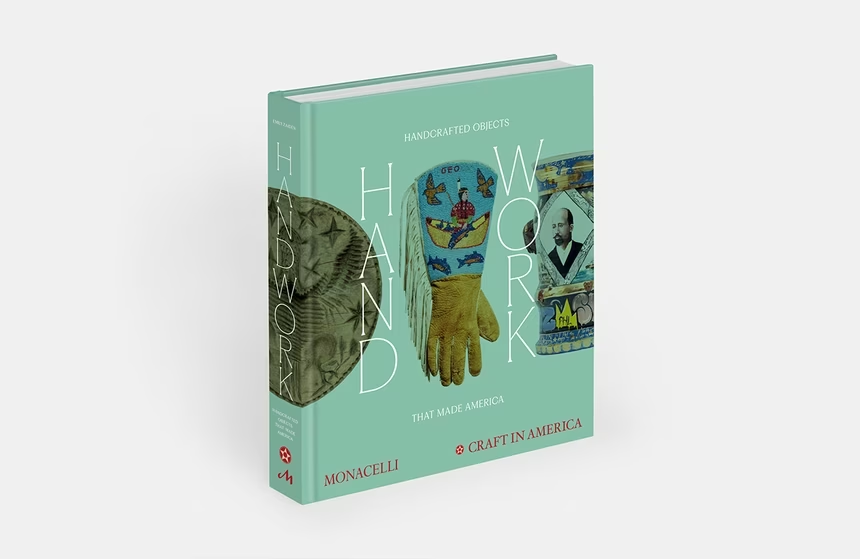
The Handwork Book
Celebrate America’s spirit with Handwork: Handcrafted Objects That Made America, a visually stunning, deeply inspiring new book that brings together unexpected, overlooked, iconic, and everyday handmade objects spanning more than 250 years.Providing Support for PBS.org
Learn Moreabout PBS online sponsorshipJessica Osceola: My family are all members of the Seminole Tribe of Florida.
Making objects is something that we're just born into.
It's part of your natural learning process.
Ato Ribeiro: I've built patterns using symbols I grew up seeing in West Africa.
It reads as painting, it reads as sculpture.
It is resisting the boxes that Western culture is just very used to putting us all into.
Vicki Essig: I raise about 500 of these silkworms every year.
They will spin the pattern that I design to make a silk garment.
The silkworms do all of the sewing for me.
Sebastian Duncan-Portuondo: When you say "stained glass," most people think of windows.
I use stained glass in mosaics.
My family came over in 1960 during the Cuban Revolution.
When I was 16, my identity politicized around my queer identity, and my Cuban identity became central to thinking about who I am.
♪ Right at morning when the sun comes up ♪ Shaka Zulu: I am a cultural practitioner in the Black Masking Indian societies here in New Orleans.
When I put that suit on it's so emotional because it takes a year to put together a suit, and after that, you can't wear it again.
It's not just a costume, it's a spiritual thing.
[Rhythmic percussion playing] ♪ ♪ Ribeiro: There's something interesting with the way we relate to wood.
♪ These woods being almost like a metaphor for Black and brown bodies.
The people that structurally built this country that are inevitably hidden behind white walls.
♪ If I can pull out a pine or a plywood and highlight the beauty and the stories behind that, maybe that can translate into how we see some people and don't see other people.
♪ I am a visual artist working in sculpture, printmaking, drawing.
But yeah, I'm an artist.
I like arting.
[Chuckles] ♪ A lot of the practice that I do is collecting of repurposed materials.
[Saw buzzing] And I am trying to piece them together using their natural colors, textures, to mimic patterns that you see in textiles.
[Buzzing] I plane and join it so I have nice clean surfaces that I can glue together.
I'm way more interested in actually the end grains because it kind of talks about different histories or different stories that you can kind of enter versus using just the surface of them.
After they're glued, I have about 3 inches by 3 inches by 2 feet with my design.
[Saw buzzing] Dawn Johnson: Once he glues everything up with the long blocks, I come in and I cut them down to about 3/8 of an inch on the bandsaw making sure that those cuts are exactly 3/8 of an inch.
Precision is a huge part of woodworking in general, but Ato takes it to another level.
Ribeiro: When you slice it down and see the end grain, that's where you see the designs coming forward.
And then I have this kind of inventory where I know I have 79 of these specific tiles.
So if I have a piece that I want to work on and I need a design that looks similar to this, I know exactly how many I have and I can make something out of it.
♪ So this body of work has tiles set on modular pieces of wood that can come together to create a larger piece but can also break down easily and fit through any front door.
♪ The story of how I got here is very much rooted in my family history.
My parents met in Philadelphia when they were both in school.
They had my 2 older brothers, and by the time I was born, they decided to relocate to Ghana.
♪ I grew up in Ghana.
I went to international school.
Living there was like a nice fusion of traditional and city life.
There was a large extended family growing up in Ghana.
My grandfather was a chief, he had 8 wives.
My dad is, like, one out of 34 kids.
[Rhythmic percussion] We always got to participate in these gatherings where you would find massive drums that were etched with symbols and pictograms.
There were a lot of beautiful beadworks and highly crafted ceramic works.
And it wasn't like an object on a plinth kind of thing.
It was a part of life that you engaged with.
♪ In 2003, we decided to relocate to Atlanta so I could go to high school here in preparation to go to Morehouse.
It's a Historically Black College.
My two older brothers also went there.
As an art major, I chose to focus on this body of work that I call the Anansi series.
I grew up with the story of Anansi, this trickster spider.
These are folktales that are told to kids, and they always have these moral lessons.
Over time, it has turned into things that we know, like Br'er Rabbit.
That was kind of the beginning of this exploration of bridging cultures.
[Electric humming] I graduated at Morehouse in 2012, and then I moved back to Ghana for a few years and pivoted my practice to talk more about my African-American side of my family, my mom's side of the family.
I made these larger-than-life charcoal erasing drawings that I would present on the floor.
And I explored people like my great-grandmother, Edith Motte Young, who was a professor at Howard, but also one of the founders of Delta Sigma Theta, a big sorority here.
And my grandfather, Perry H. Young, who taught the Tuskegee Airmen but also the first Black commercial pilot to fly regularly scheduled airlines.
So these people are, like, larger than life but still just family members.
You know, they were still just people.
♪ While I was still in Ghana, I applied to Cranbrook, and I got into their printmaking program.
I started getting into lithography, a lot of etchings, but at the same time, I had a side job as a shop tech.
I kept noticing a lot of discarded materials in the wood shop, and slowly, just kind of like a magpie, started collecting them and putting them to the side just to kind of figure out what I could do with them.
And this is when I started slowly working with the scrap materials to build this Kente quilt series.
♪ Kente is a West African textile, very rich and colorful.
They're narrow strips that are woven together, selvedge to selvedge, to make larger forms of cloth.
♪ It is usually used for ceremonial purposes and rites of passage.
I was very interested in exploring how people of African descent have always embedded language in textiles as a form of communication.
♪ Adinkra symbols are very common in West African strip-weaving cloths.
These symbols have proverbs with deeper meanings, like the Sankofa symbol, which means "In order to move forward, you first have to understand your past."
♪ So I love these examples of, like, being able to have these proverbs hidden right in front of your face.
This one is the lifelong education symbol.
The proverb goes, "If you don't know, you can always learn."
I'm really interested in finding lineage to other symbols in my African-American side, specifically quilt work.
The 9 patch is a traditional quilting pattern.
It's just 9 concentric squares, but on the Underground Railroad, it was used as a calendar to mark the day where people would escape.
This Adinkra symbol looks like a version of the 9 patch.
It looks like they're cousins somehow.
But here's a monkey wrench.
That's a traditional quilting symbol used on the Underground Railroad.
These are chevron patterns, common in Kente cloth.
♪ So they are very direct references to Adinkra symbols.
They're very direct references to African-American quilting symbols, but then there are also some that I've just made a hybrid version of.
♪ It's a constant practice of just trying to represent or meditate on these certain principles or symbols.
♪ Carol Santos: Ato Ribeiro, he still lives in Sandy Springs, so to show his work in the lobby of the City Hall, we're calling it a homecoming for him.
It's amazing because it's so significant of his presence in town.
Ribeiro: I need to show my mom some pictures of this, though.
She's still in Ghana, but when she comes back, she's gonna be excited to see this show.
Santos: How did you arrive on the 3-D?
Ribeiro: The 3-D?
It was after I had developed this kind of process of working in the 3-inch by 3-inch kind of metric.
After I was done with the scraps, and I was like, "I don't want to have scraps in my own practice.
I need to find a way to use it."
So I just ended up creating the sculptures, and they were really awesome because they kind of gave this, like, cityscape.
So you lay it down, you can put it around.
Santos: And I love the diversity of it.
Like most of your work, it's mostly wood, but you have a little surprise here.
Ribeiro: With the pops of color.
Santos: Is it acrylic?
Ribeiro: Yeah, it's acrylic, just working with colors.
A big part of this body of work has to do with resisting these boxes that the art world and Western culture is just very used to putting us all into.
It reads as painting, it reads as sculpture, it reads as all these things.
It is resisting intentionally.
[Electric buzzing] All of us are made up of all these different stories and different histories.
But when you see these knots that I'm making, it's like kind of a play on words, but it's like the knots in a quilt, the knots in the wood.
I think about them as, like, this space for more stories to come.
[Electric buzzing] ♪ [Sewing machines chattering] Jessica: My family are all members of the Seminole Tribe of Florida.
Pedro Zepeda: The two big ones were made by Grandma Annie.
Then you usually have... Jessica: Making objects is something that we're just born into.
We're a really creative culture.
So I remember from, like, my youngest age, what our job was is sit down and kind of just string beads, and, boy or girl, it's part of your natural learning process, like you learn to brush your teeth.
Karie Osceola: I don't think any of us were ever told, "You have to just learn one thing."
It was, "Try to learn everything, as much as you can."
So from cooking to sewing to crafting, all kinds of things.
Marissa Osceola: All of us grew up with that mindset.
My grandmas, my grandpas, my aunts and uncles, everybody around us makes something.
♪ Pedro: I build dugout canoes.
It starts out as a whole log, and I just go through the process to carve away everything that's not a canoe.
♪ All our traditional art objects, they're more than just a physical thing.
They contain lots of cultural knowledge.
Brian Zepeda: Myself, my brothers and sisters, my daughter Corinne, we've all become highly skilled in making just about anything you can think of that is considered Seminole.
♪ Corinne Zepeda: My great-great-grandparents were Juanita and Corey Osceola.
They had their own village in Naples.
Everybody lived there, and our family would sell traditional crafts.
That's where we kind of got our start.
Tourists could walk around and buy things from everybody.
Jessica: All the grandmothers would just sew and sit together, kind of like how we do here at this community center.
Marissa: And then when they weren't sewing, they were cooking meals for everybody to eat.
Brian: In our village, we all grew up learning from our elders.
Unfortunately, we have a very war-filled history in our tribe.
The Seminole Wars, when the U.S.
tried to remove us from Florida, started around 1817.
At first, they tried to eliminate us off the face of the earth, and so we chose to fight.
Corinne: One of our leaders was Osceola.
He was really important to us because he risked his own life to save our people.
Pedro: We fought the U.S.
government for over 40 years.
That length of pursuit definitely leaves a mark on the people.
Brian: The chickees came out of the Seminole Wars because before that we built log cabins.
During the Seminole Wars, the soldiers would burn them down, and it took a long time to build a log cabin.
The chickees we could build in a day.
My family's been building them forever.
I always enjoyed making them.
♪ This is one of our traditional cooking chickees.
It's used by the community here.
Oak and cypress is our preferred woods to cook with, less smoke.
And that goes back to Seminole Wars.
We didn't want to give our positions away.
To allow the hot air to escape, there are vents on each of the long ends so the roof doesn't catch on fire.
We use cypress wood for our structure.
They're lightweight, bug-resistant.
Chickees stand up pretty well to hurricanes.
There's no walls for the wind to push against.
Jessica: One of the first traditional crafts that I did by myself was sweetgrass basket making.
This was the first basket I ever made.
I was 19, and we were with my grandma's sister.
And she taught me how to do that, so that was the first one.
Karie: This is your first one?
That's my first one.
Brian: That's a nice first example.
Jessica: And she taught me that.
Karie: That is really cool.
Brian: Yeah.
Pedro: And then this one was made by Grandma Juanita.
That was Grandma Juanita's first sifting basket she made was that one, but Grandma Annie showed her how to make them.
Corinne: Yeah.
Pedro: It's a lot of grandmas.
Corinne: Yes.
[Laughs] Karie: Did you make this one too?
Jessica: Yes.
Karie: Oh, I like this.
Jessica: For a long time I identified as a basket maker.
And then I went off to college, and college pulls you into more like Western thinking.
And I got my master's in ceramics and did figure sculpting.
♪ I started working on ceramic portraits, the image of myself.
But I still just felt like this is who I was and this is where I'm from.
So I went back to make my traditional Seminole craft.
♪ Corinne: Growing up, I learned a lot from my aunts and my Uncle Pedro, but I got to learn beading and sewing from my dad.
♪ I also do basketry and doll making.
But then a lot of my artwork is where I'm mixing traditional practices with newer elements.
And I think part of our people being around for so long is our resiliency and our ability to adapt.
My dad is one of, like, 6 people left that know how to make bandolier bags that are beautifully beaded.
Brian: The bandolier bags I make, they're a throwback to a different time period.
The last beaded bag I could find in a museum was made around 1870.
You'll see old photographs of Seminole men wearing these bags.
Because our clothes didn't really have pockets, we had to develop something to carry our goods.
♪ Today, I make bags that look just like the originals.
I'm using glass beads.
Sometimes I use antique beads, 200 or 300 years old.
♪ It takes a long time to cover just a small space.
Anywhere between 3 months to 2 years, depending on the size of the beads.
♪ Around the turn of the century, once they put in the railways and the roads, tourism boomed in Florida.
♪ So we started making things to sell to those tourists.
♪ Going back to the 1700s, we did applique, all hand stitching.
But once the Singer sewing machine hit us, applique started to be replaced by our patchwork.
Jessica: Applique is sewing fabric on top of another fabric, and then patchwork is more of, like, integrated into each other.
So you have the strips that touch instead of one on top of another.
[Sewing machine chattering] Karie: Patchwork starts off kind of simple with little pieces, and then it eventually goes into another piece that will be like this.
And then it'll go into a big old row, and then you add more fabric to it.
This I'll keep adding and adding and adding, and it'll make yards of it.
All my grandmas did all these different colors, so I'm trying to kind of channel that variety of colors and try to put it into what I make now so it just stands out.
♪ Marissa: A lot of the phases of my life were associated with the crafts that I do.
So, like, right now I'm older, I have, you know, 4 babies, and they all need clothes, so I learned how to do a lot more sewing now.
♪ I do short skirts and long skirts with our traditional capes, as well.
And then for men, I make shirts and vests.
♪ Karie: Is that one done?
Jessica: Yep.
Karie: You want another one?
Jessica: In this family, everybody has these really fine skills, like Brian with his bandolier bags and my sister with her sewing, so we all kind of look at each other as mentors of their individual craft.
♪ ♪ Pedro: There we go, it's waterborne.
♪ Corinne: The Everglades is an unforgiving place.
But it's home for us, so we know how to navigate it.
I can remember going out with my dad as young as, like, 4 or 5, learning about all of the plants and the animals and why they're important and why we need them.
♪ For us, there's just like this overwhelming feeling of, like, "This is where you're supposed to be, "this is where you're meant to be."
♪ Pedro: It's important to know where we came from and all these skills that our ancestors gained over the generations and to honor them with learning those things and keeping them until you can pass it on to the next generation.
Jessica: Yeah, that's really good.
Marissa: Do you want it longer?
Jessica: I like that.
Girl: I'm making, um, bracelets.
I've already made two bracelets and one choker.
There's a lot of colors on here.
Corinne: I just wanted to show you.
Brian: Ooh, that's nice.
Corinne: I made a jacket.
Brian: Very nice.
Brian: I know that when I'm not here, somebody will have the skills that I have, somebody will have that knowledge that I have, because I've taken the time to pass that on.
Very nice, I like it.
Boy: Red, white, black, red.
Jessica: Craft links the generations.
Boy: Black, white, red, black.
Jessica: You're looking at your past, your present, and your future.
And it's good that the chain never gets broken, the information doesn't stop, that understanding of family and village doesn't stop.
Boy: White.
Jessica: Very good.
All right, you got a little more to go.
Marissa: [Chuckles] ♪ Vicki: Silk has been used almost 10,000 years.
♪ It's this delicate fiber.
It can be strong, it can be beautiful, it can shine.
And knowing where it comes from is just fascinating to me.
♪ I raise about 500 of these every year.
They are the bombyx mori, the domesticated silkworm.
It's a caterpillar.
I don't know why we call it a worm.
♪ In May, when the mulberry trees start leafing out, I take the silkworm eggs out of my refrigerator.
They're the size of a poppy seed.
After about 10 days, they hatch.
Once they start eating, I am out in the woods collecting pounds and pounds of mulberry leaves.
They eat for between 4 to 6 weeks.
And once they're finished eating, they'll be ready to spin a cocoon.
Silkworms need to have a corner or two different planes in order to spin the cylinder shape of a cocoon.
And if you take away one of those planes, they'll eventually spin flat.
So the flat surface that I use is a pattern that I designed to make a garment.
And I cut that pattern out of foam core, and then the silkworms will spin the shape of whatever I give them.
They don't particularly want to do that, so part of my job is to continue putting them on that flat surface.
Once the worms have laid down enough silk on the pattern piece, then I'll just carefully pull that silk off, and it'll leave me with a lovely piece of fabric.
Then I'll take those pieces and pin them together, And then lay more silkworms on top of that, and they will actually stitch the garment together.
I don't use any scissors, I don't use needle and thread.
I let the silkworms do all of the sewing for me.
♪ When I realized that they would spin any shape that I gave them, I decided to have them spin a flowing dress for me.
After that dress, I made a pair of overalls that I dedicated to Joyce Ladner, the civil rights activist.
During the civil rights protests, overalls were the symbol of how poor people and people of color were made to dress to delineate them from the affluent whites.
♪ And since then I've made a tutu, and it's dedicated to my niece, who is transgender.
And I want people to look at it and to respect people for trusting that they know who they are.
♪ So this year, I'm making a hoodie.
It's in honor of Trayvon Martin, who died at 17 by the hands of another human being.
♪ I hope it just reminds us that it still happens, it's happening every day.
♪ It's a temperate rainforest here, and I'm always collecting things and bringing them back to my studio.
Most of the time, my studio has as much natural objects and detritus as my yard does.
If I want to embed a natural object into the garment, I'll put more silkworms on there, and they'll actually attach it to that piece of silk.
It's kind of a magical thing that they do all on their own.
We can look at that rhododendron... My husband, Dan, taught me to see the small parts of nature, to look close at just little things.
Daniel Essig: I consider myself a book artist, and I make small wooden books.
The covers are wood, and the binding I use is a 4th century Ethiopian-style binding.
And I use very fine handmade paper in the books.
The window that I'm using here is called mica.
It's a silicate mineral that's found here in Western Carolina.
Mica splits apart in many, many layers, so it just pops apart.
You could pop it apart and then put objects in between and then put it back together again.
♪ I studied photography in the Midwest, and that led me to Penland School, which is a craft school that just sits a couple miles behind us.
Vicki: I grew up in Colorado and had taken classes up there and taught up there, so it was also really important to me.
When people go to Penland School of Craft, they tend to not leave, or, if they do leave, to come back, because the community of artists just draws in more artists.
So it was an easy move to come up here.
♪ We live in the woods.
My studio is just up a few steps from the house.
Dan's studio is down the hill right along the North Toe River.
It's important we have separate workspaces, it's good for our marriage.
I was trained as a hand weaver.
I use a loom, working with silk.
The thread is very fine, and I weave a pattern into it.
I've also woven in parts of phrases in different languages and stitched on just pieces of nature that you would normally brush away from your doorstep.
♪ You can look at my work, and it kind of draws you in and calms you down just by the fact that it's intimate and that it has to do with nature.
♪ Robert P. Bell: The weaving's exquisite, the way she adds found objects with silk.
Also, Vicki is our treasurer.
We're an artist-run gallery, and we represent about 50 artists that are located in Western North Carolina.
Vicki: There's 6 of us that own the gallery.
Man: It's been busy today.
I mean, it really has.
Vicki: The gallery itself doesn't make a lot of money, but it holds a place for local artists like myself to be able to show their work and to sell their work.
The arts community here is called Toe River Craft.
You have the South Toe and North Toe, and you have the Toe River, and so we're all kind of connected that way.
Vicki: The Toe River is gorgeous.
It also was very scary when we lived through Hurricane Helene.
[Wind howling] Daniel: The storm hit about 9 a.m., and the power goes out, and then the cell goes out.
And just the entire day, I watched the river creep up towards my studio.
It was 30 feet of raging water.
♪ Vicki: The river rose over the tracks and flooded the post office.
Dan and I were actually standing here when we saw our neighbor run across to save Becky, our postmistress, and pull her out from the water.
We saw floating groceries from the local grocery store.
We saw oil trucks.
Every kind of debris that you can imagine, we watched come down this river.
Elizabeth Brim: Autumn saw the house across the river quiver and then raise up and slide around and go up under the bridge.
Autumn Brown: It got hung up on a power line for about 5 minutes before it went, and then I heard it hit the bridge at 3:30, and that's where you were standing.
Kit Paulson: Yeah.
Vicki: How did that feel when it hit?
Paulson: Oh, I was sobbing.
Vicki: Yeah.
Brown: Yeah.
Daniel: The next day, the river was down, but then it left two feet of mud and sand and quicksand everywhere, so you couldn't walk through it.
We were very, very isolated.
Brim: There were trees with electrical lines all tangled up in them.
Vicki: This county lost about 50% of all of its trees.
Brown: People were cutting like mad with their chainsaws, and one week in, still no electricity, no water.
Vicki: You met your neighbors you didn't know.
Brim: Mm-hmm.
People came by bringing food.
There was a family, and they stopped with a pot of chili this big.
Brown: Yeah.
Brim: And cornbread and beer.
Brown: And that chili was really good.
Vicki: Yeah.
You saw the goodness in people.
It just made you feel so grateful for what we have and what we didn't lose.
♪ Working with silkworms brings to mind the phrase "memento mori," which means "a remembrance of death."
During their life cycle, they'll pupate, start their metamorphosis, and they'll emerge as moths.
They don't fly, they don't eat.
Their only concern is mating and laying eggs.
So they're here on Earth with me for about 8 weeks during their life cycle, and then they were gone.
But they leave behind something beautiful.
♪ ♪ Duncan-Portuondo: Stained glass is something that moves people deeply.
People have a visceral response to stained glass.
♪ When you say "stained glass," most people think of windows.
I use stained glass in mosaics.
♪ Miami is a place where over half the people were born in a different country.
It's a land of exiles, a land of immigrants.
Cubans transformed the face of this city and really gave it that identity as a Latin city.
♪ My family came over in 1960 during the Cuban Revolution.
I got lucky to learn art from my grandmother.
Rosario Portuondo Duncan: My mother painted in Cuba.
Then, when we all came here, one of the ways that she decided to connect with her grandchildren was to teach them art, and, of course, Sebastian was her star student.
Duncan-Portuondo: We used to paint side by side, talk, learn about each other through the act of making something beautiful.
[Glass snapping] I think of stained glass mosaics as a form of painting.
Like, the pieces of glass are kind of like brushstrokes, and you're dealing with shading, you're dealing with composition, you're dealing with a lot of the same ideas as painting.
The first stained glass piece that I created was a mosaic on my parents' back porch.
For that piece, I had friends come over to the house.
We smashed glass with hammers, cut strips into buckets, so there's a bunch of different hands in that mosaic.
And then my grandmother painted a peacock to incorporate the door into the design.
♪ When I was 16, my identity politicized around my queer identity, and my Hispanic identity also became very central to thinking about who I am.
In Cuba, there's a really strong history of stained glass making, particularly the medio punto, which is a half-circle window that is above doorways and window openings.
This became an iconic part of Cuban aesthetic language that was carried into exile, and I had this desire to become part of the Cuban history of stained glass making.
So even though I couldn't be in Cuba, I could still participate by working in stained glass.
♪ Plymouth Congregational Church was the church that I grew up in, and they invited me to create a stained glass window for a new chapel in the back of the campus.
I went to the site, and I saw a flower falling from the canopy and decided that would be the inspiration for the window.
♪ Christopher Rodriguez: Ever since Sebastian created that stained glass window, he's been dreaming of getting married under it.
Duncan-Portuondo: I met Christopher, my husband, in our senior year of high school.
Rodriguez: And it was a long process of discovering what fate had in store for us.
♪ Duncan-Portuondo: It was a big journey arriving at this place where we could be in a room full of our families loving us and celebrating together.
[Cheering] ♪ It's interesting how this morphed into that larger crown.
Creating mosaics, I go through a design process with the client.
In this case, it was me and Christopher talking through many different iterations on a fireplace mosaic in our apartment.
Rodriguez: In this design, I can see it with the purple wall.
Duncan-Portuondo: With options of the blue or the sandy color mosaic.
The mosaic is inspired by the conch.
The shell is the home of the animal, where it lives on the shores of the Caribbean.
It seemed like an appropriate theme for me and Christopher making our lives and our home here in this apartment.
With my mosaics, I have to cut strips of stained glass and find ways for them to fit together.
It's like improvisational, it's not controlled, it's not tight, it's loose.
♪ The last moment of the mosaic process is grouting.
You cover the mosaic with this muddy substance and you just kind of slowly wipe it away and reveal the final mosaic.
♪ For me, this is one of the magic moments of the process.
♪ [Sirens blaring] The Pulse nightclub shooting happened in 2016.
49 people were killed, mostly queers, mostly Latinx.
The shooting occurred in really one of the most sacred places in the queer community, which is the dance floor.
This is our church.
I asked myself to make a memorial.
This developed into Club Exile.
♪ Club Exile exists through a series of objects that are made sometimes in collaboration with other people to create an atmosphere that recalls the dance floor.
♪ Club Exile has gone to different locations and invites people to make mosaic work together, usually mirror mosaics.
[Indistinct chatter] And we decorate the frames to tell the stories of each individual who passed at Pulse nightclub.
♪ One of the cores of Club Exile has been altar building.
We'll have a moment of silence as we bring the portraits to the altar.
It's this time of reflection, of sadness, and that's followed by a drag show [Cheering and applause] where we fill ourselves with the emotions that the people at Pulse were experiencing that night, this joy, this fulfillment of who they are, of every aspect of who they are.
♪ Through Club Exile, I want to create that capacity for us to understand each other, and that's what I think is the true memorial.
♪ Here in South Florida, I made a mosaic on a wall.
Across this undulating landscape, you have birds that use Florida as a land bridge to get across the Americas.
But I was also thinking about the people of the Americas not having a freedom of movement from Cuba to Florida or back to Cuba, a freedom beyond political boundaries.
♪ The United States is a place where people came with the hope to make a better life.
And I think that that hope burns alive in all of us.
♪ ♪ Shaka: I am a musician, a stilt dancer, and a cultural practitioner immersed in the Black Masking Indian societies, which is a very, very unique culture that's based here in New Orleans.
[Singing] I happen to be a chief of one of those nations, Golden Feather Hunters is our nation.
C. Naimah Zulu: There's about 1500 Black Masking Indians, both downtown and uptown, that do this culture that is indigenous to New Orleans.
♪ Edward Buckner: Black Masking Indians started over 200 years ago as homage to the help that the Native American Indians had gave to us Black people back then.
But the tradition started out of resistance because African Americans born in New Orleans, we couldn't do Mardi Gras with Europeans in the French Quarter.
♪ So we had our own holiday traditions that we did in our streets and neighborhoods.
♪ We would get feathers and stuff like that, getting shells to help put together a suit, and you'd all look good.
Angela King: Shaka has been doing it since he was a child.
His father was also a chief of a tribe, and he is an exquisite craftsman.
Shaka: Just got to make sure that all the parts are connected.
There is a difference between the uptown tribes and the downtown tribes.
The downtown tribes are 3-dimensional suits, and Shaka makes 3-dimensional suits.
Shaka: It takes a year to put together a suit, a lot of planning, a lot of money, a lot of time, and we're hand-beading and hand-sewing these suits.
You know, you're talking about 300 pieces on a suit, so a lot of geometry, it's like putting together a puzzle.
♪ Year after year, each suit is different.
There we go.
Naimah: Oh, wow, came out all right.
Came out all right?
Most of the suits that I make is about something I'm trying to bring attention to.
This year is climate change and how it's changing the ocean.
[Laughing] Shaka: I have seahorses on there because of the coral reefs.
I have turtles because there's a lot of plastic that's going in the ocean.
Last year was the monkeys.
This is called "The Monkey Mosaic," and this suit was inspired by one of our trips to Tanzania, and I just wanted to bring attention to the national forest in Tanzania.
This is probably one of my favorite suits because it has moving parts to it.
I wanted the monkeys to be dancing, you know, second-line, second-line monkeys.
I really got to-- probably going to have to put ties in here now because the weight is shifting it down too much for the Velcro to hold.
Naimah: Do you want me to try to close it?
I am a performing artist, a health educator.
Yeah, you definitely need ties.
Shaka: I'm gonna need ties.
Naimah: Yeah.
And I am a masking, traditional craftsperson.
♪ There are different beading styles and sewing styles that we use on these suits.
Some are very African-influenced.
Shaka: This masking tradition is something that can be passed on to the next generation.
We have a number of children involved in Golden Feather Hunters.
Naimah: We just want to make sure that these kids are being a positive force within their communities and within their families.
You're doing a great job.
King: Naimah is also a student of Egyptian culture... Shaka: Next one.
King: ...and she inspired Shaka to use the themes she was learning about.
♪ Shaka: She went into the Egyptian temples and tombs.
She's been studying how to read hieroglyphics.
♪ King: In the gallery, we have Shaka's "Egyptology 2022," and it is the fourth suit that he's made on that theme.
The suit has Ankh symbols, the scarab, the birds.
Naimah: All of those were very important symbols about transformation for the afterlife, but they also represent what we do in this life.
And in our Golden Feather nation, this suit reflected his transformation, becoming anew every single year.
♪ Buckner: Red Flame Hunters, it's the Black Masking Youth Indian tribe of the neighborhood of New Orleans.
[Playing drums] ♪ We give the kids all the beads, all the thread, sequins, and we're teaching them how to make a suit.
I'm the head of the tribe.
Everything is leading to me, and I'm 9 years old.
So this is my grandma right here.
I made a lion because she was a Leo, and she passed away last year, so that's why I did this suit about her.
And it took a long time to stitch every single bead one by one.
It makes it very hard.
Buckner: Play like you feel it.
Play, play!
When I was a young man, I was a drum major in high school, but I fell off track and I started using drugs and became homeless.
♪ It's your first time.
You ain't never did this before.
I know you can do it, though.
But I found my calling here that I could get kids off the street.
Good or bad, you just try to do your best, all right?
It take too much time to build a suit, so if you're building a suit, you ain't got time for trouble.
But I want to be able to talk to your teacher if I want to.
Sherman: Yeah, that's how you do it, you keep on going.
I want to be able to talk to your parents about your grades.
It's an important thing to us here.
Education is the key to us helping you be a better kid.
♪ Today is Super Sunday.
All of the tribes, they're gonna hit the street for the parade.
♪ Everybody good?
Everybody feeling good?
Sherman: ♪ I'm chief, get out my way ♪ Buckner: When you get these kids as chiefs, you want them to be able to sing and dance.
Sherman: ♪ I'm chief now, boy, I am the best ♪ Buckner: Princeton is going to be a superstar.
♪ In the front and twice in the back ♪ [Chanting] Shaka: Good chief!
I am big chief!
I am big old chief!
Pretty pretty!
Pretty pretty!
Big old chief!
When you put that suit on, it's so emotional because we do it just 3 times in a year for Carnival Day, for St.
Joseph Night, and for Super Sunday.
Then after that, you can't wear it again.
♪ Naimah: Super Sunday, we're pretty much processioning and seeing how beautiful the other nations are.
♪ Shaka: In the New Orleans Masking Societies, it's not just putting on a costume.
It's a spiritual thing.
Once you put a mask on, you're not a person anymore.
You become an entity of what it is that you're masking.
[Chanting] Woman: [Shrieks] Woman 2: Yeah!
Man: ♪ Oh, pretty queen, hey ♪ [Woman ululating] ♪ Hey, at morning when the sun comes up ♪ ♪ Tell-a your mama ♪ Shaka: My wife is in a very important role this year.
Naimah Zulu, the big queen.
[Chuckles] Naimah: We have little queens, and we have queens, and we have the big queen next to the chief of our nation.
♪ ♪ My big chief got a golden crown ♪ ♪ Sherman: ♪ I say I'm on a holiday ♪ Red Flames: ♪ Get down, here they come ♪ Sherman: ♪ On Mardi Gras, I'm gonna rock a while ♪ Red Flames: ♪ Get down, here they come ♪ ♪ Buckner: To me, working with kids, it's more than a job.
It's a love and a commitment to people.
Chief: ♪ Hey, in the morning ♪ Indians: ♪ Hoo na nee ♪ Chief: ♪ You leave me ♪ Group: ♪ Hoo na nee ♪ King: Let's get this word out.
People need to know this is an American culture.
[Drumming] ♪ They're masking, they're marching, they're drumming.
And that is a stage for the rich history of New Orleans.
♪ ♪ Announcer: Watch all episodes of "Craft in America" online with additional videos and more.
Visit "Craft In America" at PBS.org.
This episode of "Craft in America" is available on Amazon Prime Video.
 New
Video has Closed Captions
Preview: S18 Ep2 | 1m | SOUTH explores craft artists who are building an inclusive and hopeful future. (1m)
Providing Support for PBS.org
Learn Moreabout PBS online sponsorship
- Arts and Music

Innovative musicians from every genre perform live in the longest-running music series.
 New Episode
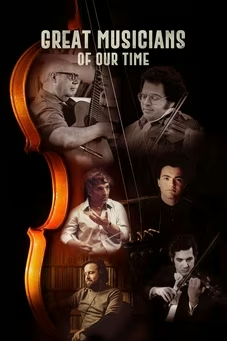
- Arts and Music

Intimate portraits of six of the most influential and celebrated classical music artists.
 New Episode


 New Episode
 New Episode
 New Episode
 Recently Added
Support for PBS provided by: