
Levi Ames and the Spectacle of Public Execution
There has always been a fascination with those that commit crimes and how they're punished for them.
From
Levi Ames and the Spectacle of Public Execution
Clip: Episode 1 | 2m 45sVideo has Closed Captions
There has always been a fascination with those that commit crimes and how they're punished for them.
In 1773, 21-year-old Levi Ames was found guilty of burglary for the third time and sentenced to death. Printers produced 18 different versions of his confession, which fascinated the public. Today, we watch television shows and read books about crime and punishment, showcasing the same fascination our ancestors did.
From
Problems playing video? | Closed Captioning Feedback
Problems playing video? | Closed Captioning Feedback
Episodes presented in 4K UHD on supported devices. Major funding for CRIME AND PUNISHMENT IN AMERICA was provided by The Atlantic Philanthropies, Emerson Collective, The Andrew W. Mellon Foundation, and...
Levi Ames and the Spectacle of Public Execution
Clip: Episode 1 | 2m 45sVideo has Closed Captions
In 1773, 21-year-old Levi Ames was found guilty of burglary for the third time and sentenced to death. Printers produced 18 different versions of his confession, which fascinated the public. Today, we watch television shows and read books about crime and punishment, showcasing the same fascination our ancestors did.
From
Problems playing video? | Closed Captioning Feedback
Where to Watch Crime and Punishment in America
Crime and Punishment in America is available to stream on pbs.org and the PBS app.
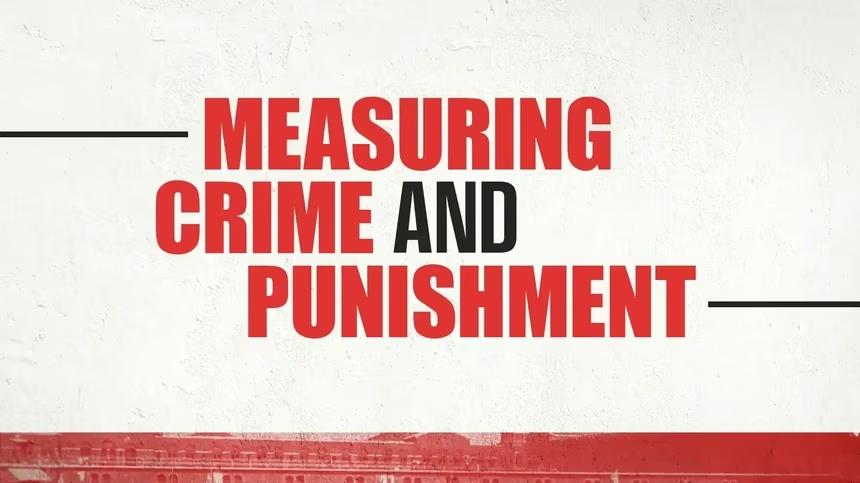
Measuring Crime and Punishment
How does the way we collect and measure crime shape our understanding of it? Crime statistics can tell us how crime changes over time. But the way crime is measured, defined, and communicated can also shape public perception and policy.Providing Support for PBS.org
Learn Moreabout PBS online sponsorshipVoice: I, Levi Ames, was born in Groton, in New England, of a credible family.
My father died when I was but two years old.
I am the first of the family who was ever disgraced.
My prevailing sin was thieving.
I began by stealing a couple of eggs, then a jack-knife, after that some chalk.
I stole a gun from Josiah Richardson and a large silver spoon from one Mr.
Howard.
I robbed the Rev.
Mr.
Clark of a tankard, 12 tea-spoons, and two pair of sugar tongs.
I thought to repent and reform; but found myself powerfully urged to repeat this wickedness, by the temptations of the devil.
[Levi Ames] Narrator: In 1773, when Levi Ames was 21 years-old, he was found guilty of burglary for the third time and sentenced to death.
While he was held in jail awaiting execution, printers produced 18 different versions of his confession, selling and reselling his story to a public fascinated by tales of crime and punishment.
Jen Manion: At its most basic level, it was entertainment.
Public statements from the person who was going to be executed were often some of the most popular publications in the Colonial Era, and executions were some of the largest public gatherings.
There's a very good chance that most people witnessed a public execution in their lifetime.
We, today, watch television shows and read books that are all about crime and punishment.
We're no different, you know, than people from the Colonial Era.
Narrator: On the day Levi Ames was to be executed, some 8,000 people converged on the city of Boston to watch him hang.
Voice: I am now made to feel the anger of God against me.
God will not let disobedient children pass unpunished.
May God forgive me my dreadful wickedness.
[Levi Ames] Stephen Breyer: The human condition is a difficult condition.
The way things used to work 10,000 years ago is you lived in little groups, and someone came from behind a rock, and you didn't recognize him.
The only wise thing to do was kill him immediately because he might kill you, and gradually, there has been the development of a civilization away from that kind of thing and not perfectly, either, by any means.
♪
 New
America Creates the World’s First Penitentiary
Video has Closed Captions
Clip: Ep1 | 8m 30s | The Founding Father Benjamin Rush offers a new form of punishment: the world's first penitentiary. (8m 30s)
 New
Austin Reed Details His Experiences in Auburn Prison
Video has Closed Captions
Clip: Ep1 | 9m 40s | Austin Reed recounts his experiences over two decades of being incarcerated in Auburn Prison. (9m 40s)
 New
Elam Lynds Reforms the Auburn Prison System
Video has Closed Captions
Clip: Ep1 | 2m 21s | The new head guard at Auburn Prison establishes a new strict regimen of efficiency and order. (2m 21s)
 New
The House of Refuge and Juvenile Detention
Video has Closed Captions
Clip: Ep1 | 3m 58s | The House of Refuge is the nation's first institution for the reformation of juvenile delinquents. (3m 58s)
 New
The Largest Mass Hanging in American History
Video has Closed Captions
Clip: Ep1 | 4m 26s | President Abraham Lincoln sentences 38 Native Americans to death for attacks against settlers. (4m 26s)
 New
The Myths and Fascination with the Outlaw Jesse James
Video has Closed Captions
Clip: Ep1 | 13m 42s | During the Reconstruction Era, an outlaw captures the public's attention: Jesse James. (13m 42s)
 New
What Does It Mean to be Accountable?
Video has Closed Captions
Clip: Ep1 | 10m 11s | When a crime is committed, should we look to punish or to move forward toward healing? (10m 11s)
Providing Support for PBS.org
Learn Moreabout PBS online sponsorship












Support for PBS provided by:
Episodes presented in 4K UHD on supported devices. Major funding for CRIME AND PUNISHMENT IN AMERICA was provided by The Atlantic Philanthropies, Emerson Collective, The Andrew W. Mellon Foundation, and...